Free deliveries for orders over £50
 info@agx-nordic.co.uk
 07709 389021
Why mould forms on fabric
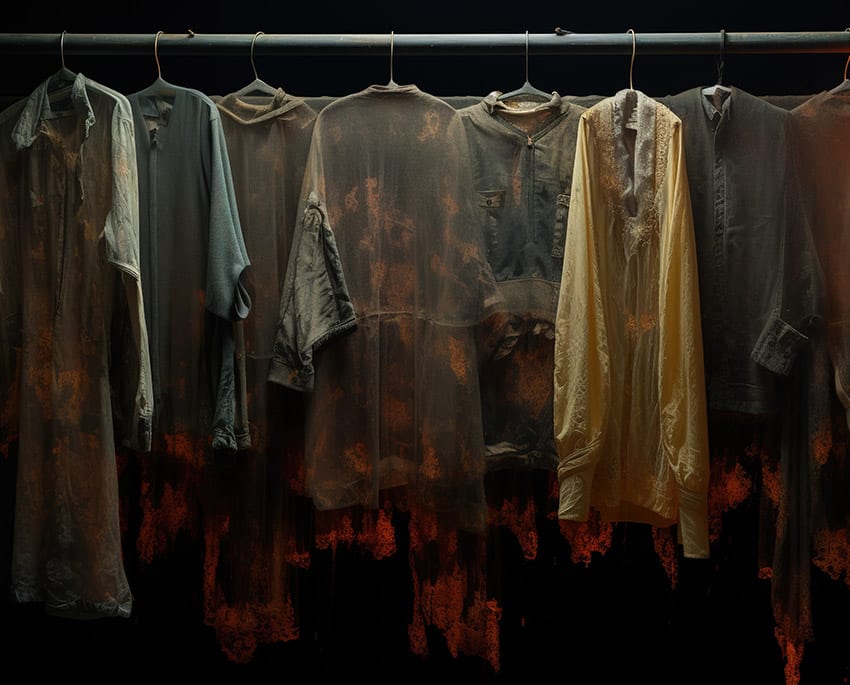
Mould often develops on fabric stored in damp or poorly ventilated areas such as basements, garages or wardrobes. When textiles remain wet due to high humidity, spills or incomplete drying, they become ideal environments for mould growth. Limited airflow and lack of light, especially during colder months, allow mould to thrive indoors.
Understanding these conditions makes it easier to prevent future problems. If you suspect hidden mould in wardrobes or storage areas, consider using a mould test to check for spores before damage spreads.

How to prevent mould on fabric
Preventing mould on clothes and household textiles starts with correct storage and moisture control. Follow these simple prevention tips:
- Store fabrics in dry, well-ventilated spaces and avoid sealed containers.
- Never put away damp or freshly washed clothes before they are completely dry.
- Regularly air out storage rooms and use a dehumidifier if humidity is high.
- Keep humidity below 60 percent and ensure good ventilation throughout your home.
Good mould prevention habits protect your clothes, furniture and indoor air quality. For more practical advice, see our page on preventing mould.
How to remove mould from fabric
If mould has already appeared on your fabrics, you can remove it effectively with the following steps:
- Pre-treat outdoors: Gently brush off visible mould outside to prevent spores from spreading indoors.
- Wash thoroughly: Wash the fabric in the hottest water suitable for the material, using a mild detergent. Add vinegar or baking soda to the wash cycle to neutralise mould and remove musty smells.
- Dry in sunlight: After washing, hang the fabric outside in direct sunlight. UV rays help kill mould spores and eliminate lingering odours. If sunlight is not available, use a tumble dryer on a high heat setting if the material allows.
- Repeat if needed: For persistent stains or strong odours, repeat the process or use a specialised mould remover designed for fabrics.
In severe cases where mould has penetrated deep into fibres, professional cleaning or mould remediation may be necessary to ensure all spores are removed. For further guidance, you can reach us via contact us.

What happens if you don’t remove mould from fabric
Leaving mould untreated on fabric can cause permanent stains, weakened fibres and unpleasant odours. Spores can also spread to other materials such as curtains, carpets or furniture. Beyond damaging textiles, exposure to mould spores may cause skin irritation, coughing and allergic reactions.
To protect both your belongings and your health, remove mould promptly and store fabrics in dry, well-ventilated conditions. For more information about how mould affects materials and health, visit our mould encyclopedia.
Buy a mould test
View all our products-
Surface mould test (min order 2)
The professional PRO-Clean enzyme test will give you a quick mould screening in just 5 minutes. The test works by measuring the protein in the mould. Contact us for discounts on larger quantities.15.00 £ -
Mould air test
If you suspect hidden mould growth, it is a good idea to perform a mould air test. Mould can thrive in concealed places behind panels, walls, and other hidden areas. NB! The test should be used as soon as possible after receipt, as it has a limited shelf life.33.99 £ -
Surface and air mould test bundle
Test for both visible, surface mould and invisible, hidden mould with this test kit. The Pro-Clean surface test pens will indicate if any visible mould is a problem and the air test plate will after 4 days show if there were an excessive amount of mould spores picked up from the air.59.99 £ -
Sale!
Sale!
Mould test kit
Test your air for mould and keep an eye on the humidity levels in your home with our promotional bundle.Original price was: 39.98 £.34.99 £Current price is: 34.99 £. -
DNA mould test
This test goes a step further than the mould air test with a lab report. By analysing the mould spores to a DNA level, different species can be identified and the report will specify up to 21 different species and how many were present in the sample. This is the most precise mould spore test on the market, using much more advanced scientific equipment to give you an insight into which spores are present in your indoor air.240.00 £