Free deliveries for orders over £50
 info@agx-nordic.co.uk
 07709 389021

What is a moisture meter?
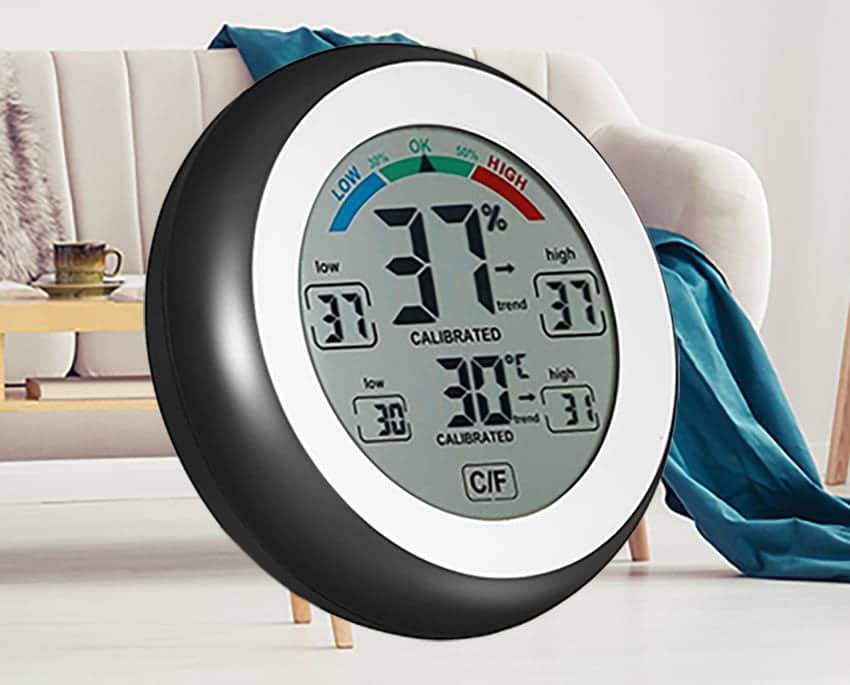
A moisture meter, also known as a hygrometer, is a device used to measure humidity in indoor air or materials. With a moisture meter, you can detect moisture problems early and reduce the risk of mould, damp damage and poor indoor air quality.
Electronic moisture meters are generally more accurate than mechanical models. They use electronic sensors to measure humidity levels and are easy to use, making them ideal for everyday monitoring of indoor conditions.
Why do I need a moisture meter?
A moisture meter helps you identify moisture problems at an early stage, which can prevent costly repairs and structural damage. It also helps you maintain a stable indoor climate, reducing the risk of allergies, respiratory issues and discomfort caused by dry or humid air.
Using hygrometers and moisture meters gives you better control over your indoor environment and helps you act before moisture becomes a serious issue.
Why is it important to measure indoor moisture?
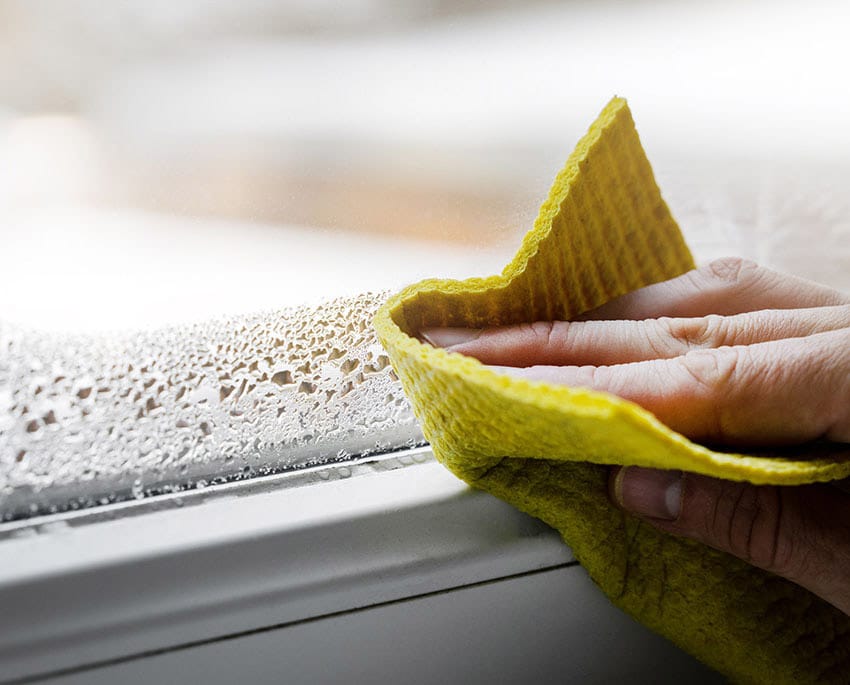
Indoor moisture levels have a direct impact on both health and building materials. Excess moisture can lead to mould growth and damp damage, while air that is too dry can cause skin irritation, dry airways and discomfort.
Monitoring moisture levels allows you to avoid too much moisture and maintain a balanced indoor climate throughout the year.
How does a moisture meter work?
Mechanical moisture meters absorb moisture from the surrounding air using materials such as hair or synthetic fibres. As the material expands, it moves a needle or scale that indicates the relative humidity level.
Electronic moisture meters work by sending an electrical signal through the air being measured. The response is analysed to determine the relative humidity with high accuracy.
How do you measure indoor moisture?
To measure indoor moisture, place the hygrometer in the area you want to monitor, such as a bedroom, living room, bathroom or office. Avoid placing the device in direct sunlight or near heat sources, as this can affect accuracy.
For best results, use equipment that can measure humidity and temperature, as this gives a more complete picture of indoor conditions.
Create a healthy indoor climate
Once you have measured indoor moisture, it is important to maintain a healthy balance. A stable indoor climate improves comfort and reduces the risk of moisture-related problems.
To create a healthy indoor environment:
- Keep humidity between 40% and 60%
- Clean ventilation ducts and air filters regularly
- Ensure rooms are well ventilated
- Avoid drying clothes indoors
- Use a dehumidifier if necessary
These steps help regulate moisture and support long-term indoor comfort.

Wood-burning stoves and moisture
When using a wood-burning stove, it is essential that firewood has the correct moisture content. Damp wood produces less heat and creates smoke and soot, which can be both unhealthy and dangerous.
A moisture meter allows you to check whether your firewood is dry enough to burn efficiently and safely.
Moisture content in firewood
Firewood should generally have a moisture content below 20%. Wood with higher moisture levels burns poorly, produces less heat and can cause condensation inside the chimney, increasing the risk of damage and safety issues.
Measuring moisture before use helps prevent these problems and improves combustion efficiency.

Renovation and moisture levels
Before painting or renovating, it is important to ensure surfaces are dry. Moisture levels in wood should typically be between 15% and 18%.
Painting damp surfaces can trap moisture, leading to rot, mould and reduced durability of paintwork. Moisture measurement helps ensure surfaces are suitable before renovation begins.
Ventilation and moisture control
Poor ventilation is a common cause of indoor moisture problems. An average person releases around two litres of water per day through breathing and skin, which increases indoor humidity.
Proper ventilation helps regulate moisture levels and prevents issues such as mould and structural damage. Indoor humidity typically should be around 60% in summer and closer to 40% during winter.
Good ventilation, combined with monitoring tools like a mini hygrometer to monitor moisture in the air meter, helps maintain a healthy indoor climate.
Buy a hygrometer/moisture meter
View all our products-
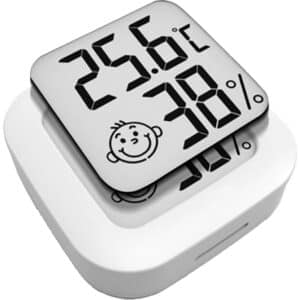
Mini moisture in the air meter
Super simple hygrometer in mini size. Displays both temperature and relative humidity. Includes a double-sided adhesive pad, so the moisture meter can be mounted on, for example, a cabinet door or a tile wall. Can also be placed on, for example, a shelf or a table.5.99 £ -
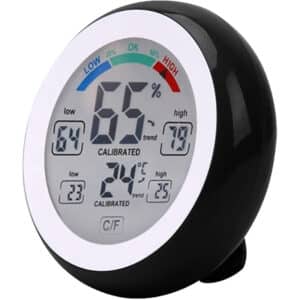
Measure humidity and temperature
Monitor relative humidity and temperature in your home or business with this simple hygrometer. Stylish design with a large, round screen. Can be hung on a wall or placed on a table. Relative humidity is measured in the range of 20-90% with an accuracy of ±5%. Temperature is measured in the range of 0-50 ℃ with an accuracy of ±1 ℃.12.99 £ -
Sale!
Sale!
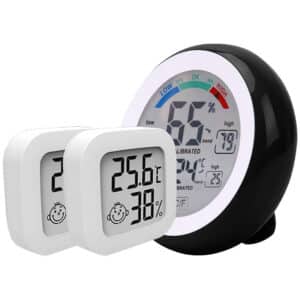
Humidity control pack
Monitor relative humidity and temperature in your home or business with this hygrometer pack. The pack contains 1 hygrometer with a large, round screen and two mini hygrometers, which can be placed on walls with stickers or via the magnet on the back on a fridge or freezer or stood on a table. Relative humidity is measured in the range of 20-90% with an accuracy of ±5%. Temperature is measured in the range of 0-50 ℃ with an accuracy of ±1 ℃.Original price was: 24.97 £.19.99 £Current price is: 19.99 £.