Free deliveries for orders over £50
 info@agx-nordic.co.uk
 07709 389021
Why radon levels matter
Radon levels can vary significantly between regions, buildings and even individual rooms. Factors such as soil composition, building design, ventilation and weather conditions all influence indoor radon concentrations.
Because radon is invisible and odourless, elevated levels often go unnoticed unless measured. Radon reference and action levels provide a clear threshold for when action should be taken to reduce exposure. For accurate results, understanding when to test for radon is essential, as timing and measurement conditions directly affect how representative the results are.
Radon levels in homes
Radon concentration in indoor air is measured in becquerels per cubic metre (Bq/m³).
In the UK, the Action Level for radon in homes is 200 Bq/m³, as set by the UK Health Security Agency (UKHSA). A lower Target Level of 100 Bq/m³ is recommended where reasonably achievable, particularly to minimise long-term health risks.
- Below 100 Bq/m³: Radon levels are low and no action is required.
- Between 100 and 200 Bq/m³: Radon reduction measures should be considered to lower exposure.
- Above 200 Bq/m³: Remedial action should be taken, followed by retesting to confirm that levels have been reduced.
Long-term exposure to elevated radon levels increases the risk of lung cancer, which is why regular radon testing is strongly advised.
Radon levels in workplaces
For workplaces in the UK, the reference level for radon is 300 Bq/m³, regulated by the Health and Safety Executive (HSE).
- At or below 300 Bq/m³: No action is required.
- Above 300 Bq/m³: Measures must be taken to reduce radon levels or manage employee exposure.
If workplace radon levels exceed the reference level, results must be documented and HSE must be notified where required. Employers are responsible for ensuring that employee exposure remains within safe limits.
Radon levels in drinking water
Radon in mains drinking water is generally not a concern in the UK, as water suppliers are responsible for monitoring and compliance.
Elevated radon levels may occur in private water supplies, such as boreholes or wells. In these cases, radon can be released into indoor air during normal water use, for example when showering.
If indoor radon levels are high and a private water supply is used, further investigation may be recommended to determine whether water is contributing to indoor exposure.
What happens if radon levels are too high?
Radon exposure increases lung cancer risk over time, especially with long-term exposure and at higher concentrations. Early radon symptoms can be difficult to notice, which is why elevated levels often remain undetected for years. Smoking significantly increases this risk, as radon and tobacco smoke together place additional strain on lung tissue.
Because radon-related health effects develop slowly and often without early symptoms, keeping radon levels below the reference values is essential for long-term health protection.
If radon levels exceed the recommended limits, the responsible property owner or employer must take appropriate measures to reduce exposure.
Measuring radon levels
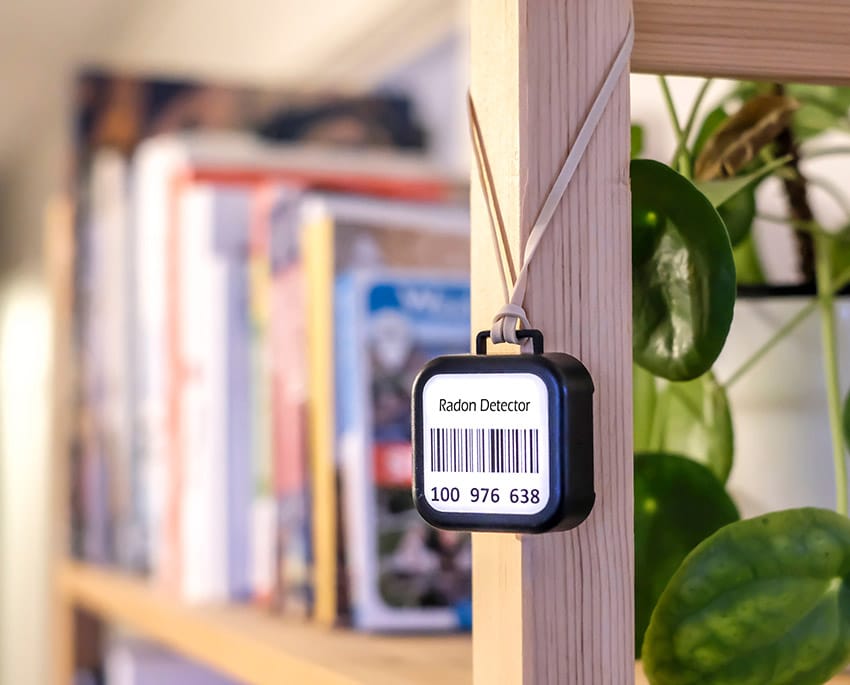
The only reliable way to determine whether indoor radon levels exceed recommended action levels is to measure them using radon detectors. In most cases, long-term testing is the recommended approach, although short-term screening can also be relevant in specific situations.
A passive radon detector should be used for long-term testing, as it provides the most accurate picture of average radon exposure over time.
In situations where faster results are required, such as during a property purchase, a radon screening test can be used to give an initial indication of radon levels within a shorter timeframe.
Measure the radon concentration
View all our products-
Radon measurement (min 2 detectors)
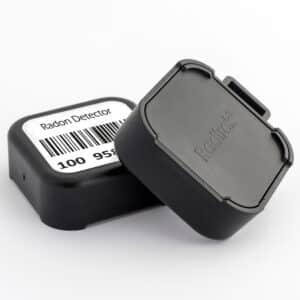
These UKHSA approved radon measurement kits provide you with the recommended 90 day radon gas measurement and report containing the seasonally adjusted average. We only supply measurement detectors from a UKHSA approved and also ISO accredited laboratory. A kit contains minimum 2 detectors, to be placed in the two most used rooms (typically bedroom and living room/kitchen).55.00 £ -
Radon screening test (min 2)
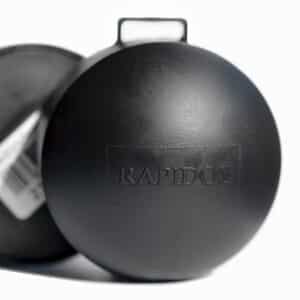
UKHSA recommends a measurement period of 3 months for radon gas but with our screening test, you'll get an indication of whether you may have too high a level of radon in just 10 days. We offer the only ISO accredited short term test on the market.85.00 £