Free deliveries for orders over £50
 info@agx-nordic.co.uk
 07709 389021
What is radon?
Radon is a radioactive noble gas formed when uranium and radium naturally break down in soil and rock beneath the ground. During this radioactive decay process, radon gas is released and can move freely through soil, foundations and building materials, allowing it to enter indoor spaces.
Radon has the chemical symbol Rn and is element number 86 in the periodic table. As a noble gas, it is colourless, odourless and tasteless, which means it cannot be detected by human senses. For this reason, elevated radon levels often go unnoticed for long periods.
Because radon originates from radium naturally present in soil and some building materials, it can affect both homes and workplaces. The only reliable way to determine whether radon levels are elevated is to measure them using a radon test, making testing essential for identifying potential health risks and deciding whether radon mitigation is needed.
Is radon dangerous?
Yes. Long-term exposure to elevated radon levels significantly increases the risk of lung cancer. Radon gas itself is harmful, but the greatest damage is caused by its radioactive decay products.
When radon breaks down, it forms solid radioactive particles that attach to dust and smoke in the air. When inhaled, these particles settle in the lungs and emit alpha radiation, which can damage lung tissue and increase cancer risk over time.
The risk depends on both the radon concentration and the length of exposure. Smoking greatly increases the danger, as tobacco smoke and radon together place additional strain on lung tissue. This is why recognising radon symptoms and knowing when to test for radon is important.
How does radon enter buildings?
Radon can enter homes and buildings in several ways, depending on construction type, building condition and local ground conditions. Once radon gas enters indoor spaces, it can accumulate and be inhaled, exposing the lungs to radioactive particles. The most common entry routes are outlined below.
The ground beneath the building
The ground is the most common source of radon in buildings. Radon gas can seep up from the soil through small cracks in foundations, gaps around pipes, floor joints and other construction penetrations.
When more air is exhausted from a building than enters it, indoor air pressure becomes lower than the pressure in the surrounding ground. This creates a suction effect that draws radon gas through cracks and openings in the foundation and into living areas.
Building materials
Most stone-based building materials contain small amounts of radium and therefore release low levels of radon. In the majority of cases, these emissions are minimal and do not pose a health risk.
However, certain older or radium-rich materials can contribute more significantly to indoor radon levels, particularly when ventilation is poor. Modern building materials are generally manufactured with radon safety in mind and rarely represent a major source on their own.
Water supplies
Radon in drinking water is uncommon in mains water supplies but can occur in private water sources such as boreholes or wells. When radon-containing water is used for showering, washing or other household activities, radon gas can be released into indoor air.
In most cases, the health risk from inhaling radon released from water is significantly greater than the risk from drinking the water itself.
How do you know if you have radon in your property?
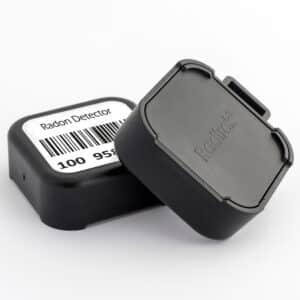
Since radon cannot be detected by smell or sight, testing is the only way to confirm whether levels are too high. Radon testing can be carried out easily using radon detectors placed in frequently used rooms.
Long-term measurements with a passive radon detector provide the most reliable results, while a radon screening test can be useful for short-term screening or time-sensitive situations. Understanding when to test for radon helps ensure that measurements reflect real exposure conditions.

Radon in the workplace
Radon exposure is not limited to homes. Workplaces, especially buildings with basements or ground contact, can also be affected. Employers are responsible for assessing radon exposure and ensuring that employees are not exposed to unsafe levels.
Exposure is determined by both radon concentration and the amount of time spent in affected areas. Regular testing and documentation help maintain a safe working environment and identify when action is required.
Reference levels for radon
Radon concentration in the air is measured in becquerels per cubic metre (Bq/m³). The radon reference level is the threshold stipulated by UKHSA (UK Health Security Agency) as being the maximum permissible concentration. There are different levels for homes and workplaces.
In homes the reference level is 200 Bq/m³. If the radon test shows an annual average radon concentration below 100 Bq/m³, the house does not require remedial measures. If the result is between 100 and 200 Bq/m³, remediation is advised. If the annual average radon concentration is higher than 200 Bq/m³, it is necessary to remediate the building and then retest.
In the UK workplace regulations specify 300 Bq/m³ as a reference level. If the result of the radon measurement is equal to or below this value, no action is needed.
If the annual average radon concentration exceeds 300 Bq/m³, action is required to reduce radon levels or manage exposures. HSE (Health and Safety Executive) must also be notified of the result.

Health effects of radon exposure
The UK’s National Cancer Institute estimates that radon is responsible for 10% of lung cancer cases diagnosed, and around 1,100 deaths from the disease, each year.
According to the World Health Organization (WHO) it is proven that radon can cause cancer. Which is why you should take the possibility of radon gas in your home or workplace seriously.
Radon can be linked to several different types of cancer. However, lung cancer is the most common.
Why radon testing matters
Testing is the first and most important step in managing radon risk. Without measurement, elevated radon levels may remain undetected for decades.
By testing regularly, you can identify problems early, take corrective action if needed, and ensure that your indoor environment remains safe. Using reliable radon detectors allows you to monitor exposure and protect both your health and your property.
Measure the radon concentration
View all our products-
Radon measurement (min 2 detectors)
These UKHSA approved radon measurement kits provide you with the recommended 90 day radon gas measurement and report containing the seasonally adjusted average. We only supply measurement detectors from a UKHSA approved and also ISO accredited laboratory. A kit contains minimum 2 detectors, to be placed in the two most used rooms (typically bedroom and living room/kitchen).55.00 £ -
Radon screening test (min 2)
UKHSA recommends a measurement period of 3 months for radon gas but with our screening test, you'll get an indication of whether you may have too high a level of radon in just 10 days. We offer the only ISO accredited short term test on the market.85.00 £