Free deliveries for orders over £50
 info@agx-nordic.co.uk
 07709 389021


Plays a crucial role
Indoor humidity plays a crucial role in both comfort and health. Relative humidity (RH) describes how much water vapour the air contains compared to the maximum amount it can hold at a given temperature.
For a healthy and comfortable indoor climate, relative humidity should generally stay between 30% and 60%. Both excessively high and very low humidity levels can cause problems for your health as well as for building materials and furnishings.
Signs of indoor humidity that is too high or too low
Being able to recognise whether indoor humidity is too high or too low makes it easier to take the right action. Common signs include:
Signs of high indoor humidity:
- Condensation on windows or mirrors
- Damp walls and ceilings
- Black mould on grout lines or behind bathroom furniture
- A musty or stale smell in the room
Signs of low indoor humidity:
- Dry skin, dry eyes or cracked lips
- Coughing, throat irritation or a runny nose
- Static electricity or “flyaway” hair
- Cracks in wooden surfaces and furniture
Monitoring indoor humidity is essential to prevent discomfort, material damage and long-term moisture problems.
How do you measure indoor humidity?
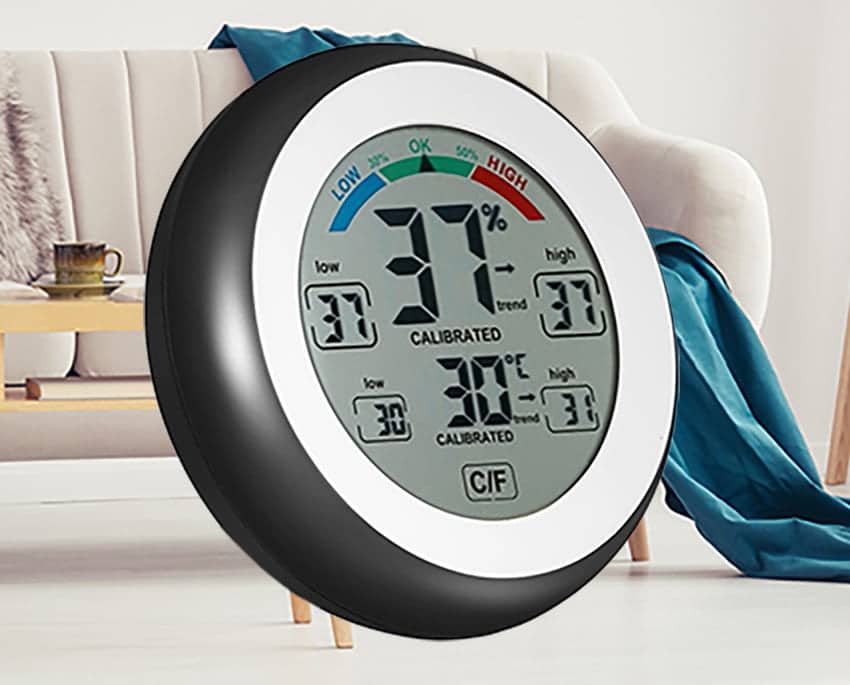
The easiest way to keep track of indoor humidity is to use hygrometers and moisture meters. A hygrometer measures relative humidity and gives a clear indication of how much moisture is present in the air.
By using tools that measure humidity and temperature, you gain a more accurate understanding of your indoor climate and can react quickly if humidity levels move outside the recommended range.
What happens if indoor humidity is too high?
High indoor humidity (above 60%) can cause serious problems, including:
- Mould and moisture damage: Mould typically requires around 70% humidity to grow. When moisture levels remain high, mould can quickly develop on walls, ceilings, grout and other surfaces.
- Poor air quality: Excess moisture leads to heavy, stuffy air that negatively affects comfort and wellbeing.
- Damage to building materials: Wood can swell, wallpaper may bubble, and paint can begin to peel.
To reduce excessive moisture, solutions such as dehumidifiers and improved ventilation can help avoid too much moisture and restore a healthy indoor environment.

What happens if indoor humidity is too low?
Low indoor humidity (below 30%) can also cause problems, such as:
- Dry skin and irritated airways: Dry air causes mucous membranes to dry out, increasing the risk of colds and infections.
- Damage to wood and furniture: When wood dries out, it can crack, warp or deform.
- Increased static electricity: Dry air allows static electricity to build up, which can be uncomfortable and potentially harmful to electronics.
In these cases, humidifiers can help restore balance by releasing water vapour into the air.
How to regulate indoor humidity
There are several effective ways to keep indoor humidity at an optimal level:
- Use a dehumidifier: Effective when humidity is too high, especially in areas such as basements or bathrooms.
- Improve ventilation: Make sure moist air is removed efficiently, particularly after cooking or showering.
- Use a humidifier: Useful during winter months when indoor air tends to become very dry.
- Monitor humidity levels: Using a hygrometer that can monitor moisture in the air helps ensure humidity stays within the recommended 30–60% range.
Preventive measures to maintain the right humidity
To keep indoor humidity stable over time, consider these preventive steps:
- Wipe down wet surfaces after bathing or showering
- Use moisture-resistant materials such as tiles and silicone sealants
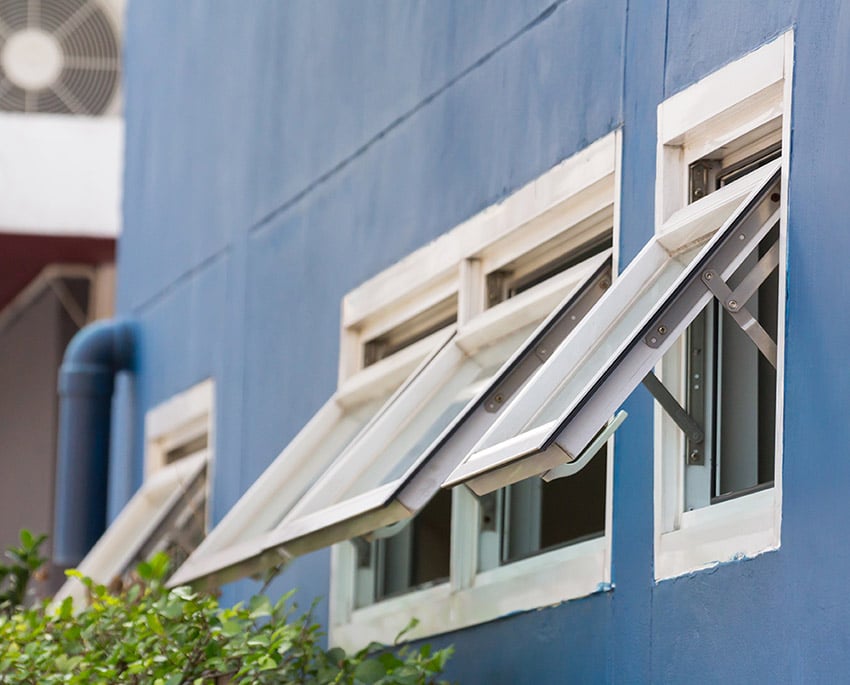
- Ventilate thoroughly by opening windows and doors regularly
- Pay extra attention to moisture in the basement, where ventilation is often limited
Preventive action helps reduce the risk of long-term moisture damage and creates a healthier indoor climate.
Buy a hygrometer/moisture meter
View all our products-
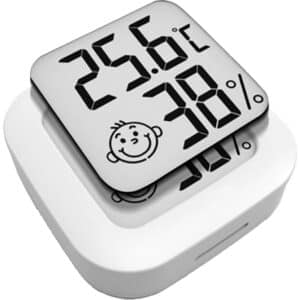
Mini moisture in the air meter
Super simple hygrometer in mini size. Displays both temperature and relative humidity. Includes a double-sided adhesive pad, so the moisture meter can be mounted on, for example, a cabinet door or a tile wall. Can also be placed on, for example, a shelf or a table.5.99 £ -
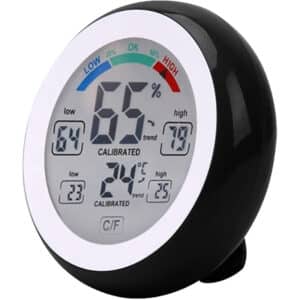
Measure humidity and temperature
Monitor relative humidity and temperature in your home or business with this simple hygrometer. Stylish design with a large, round screen. Can be hung on a wall or placed on a table. Relative humidity is measured in the range of 20-90% with an accuracy of ±5%. Temperature is measured in the range of 0-50 ℃ with an accuracy of ±1 ℃.12.99 £ -
Sale!
Sale!
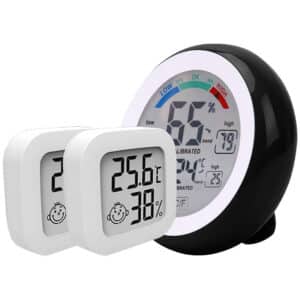
Humidity control pack
Monitor relative humidity and temperature in your home or business with this hygrometer pack. The pack contains 1 hygrometer with a large, round screen and two mini hygrometers, which can be placed on walls with stickers or via the magnet on the back on a fridge or freezer or stood on a table. Relative humidity is measured in the range of 20-90% with an accuracy of ±5%. Temperature is measured in the range of 0-50 ℃ with an accuracy of ±1 ℃.Original price was: 24.97 £.19.99 £Current price is: 19.99 £.