Free deliveries for orders over £50
 info@agx-nordic.co.uk
 07709 389021

Crucial for preventing damage
Measuring wood moisture content is essential to prevent mould and rot damage in buildings. Timber materials such as parquet flooring or structural wood that are exposed to high moisture over time can be attacked by microorganisms like mould and wood-decay fungi. This weakens both the material and the indoor environment.
With accurate measurements and the right preventive actions, you can protect both the structure of the building and your health.
What does wood moisture content mean?
Wood moisture content describes how much water is stored in the material compared to its dry weight, expressed as a percentage. A moisture content of 20% means that 1 kg of wood contains 200 grams of water.
Moisture content is influenced by both the surrounding air humidity and the characteristics of the wood itself.
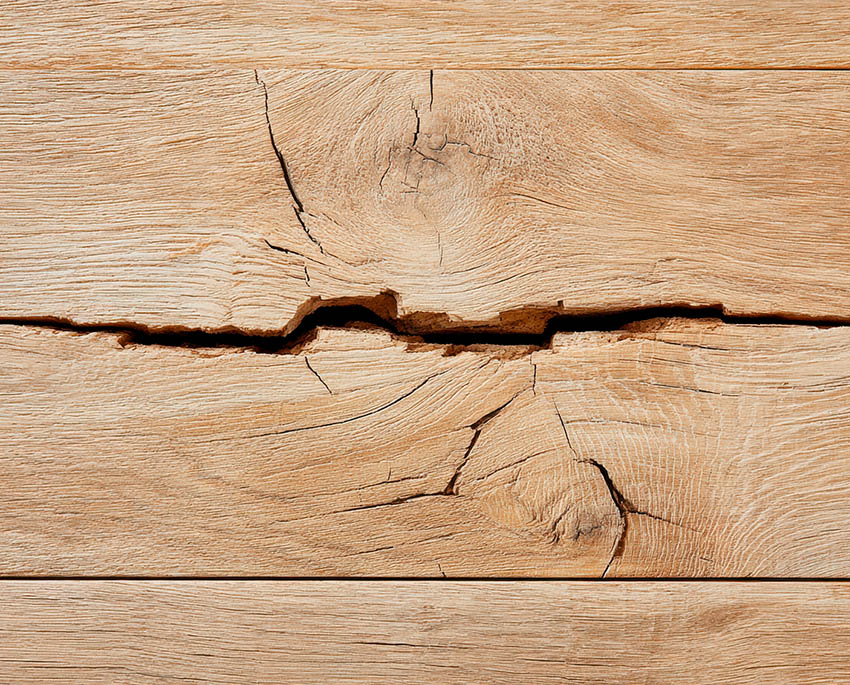
- Too low moisture content: Wood can crack, shrink or deform
- Too high moisture content: Mould and rot fungi can develop
For timber used in buildings, moisture content should generally not exceed 17–18% for spruce and pine. At 24%, conditions allow wood-decay fungi to start growing.
Why measure wood moisture content?
Measuring moisture content helps you to:
- Identify the risk of mould growth in wood before damage occurs
- Prevent structural damage in buildings and timber constructions
- Ensure wood is sufficiently dry before installation or painting
- Document moisture conditions for insurance claims or building inspections
Accurate measurement is especially important in moisture-sensitive environments.
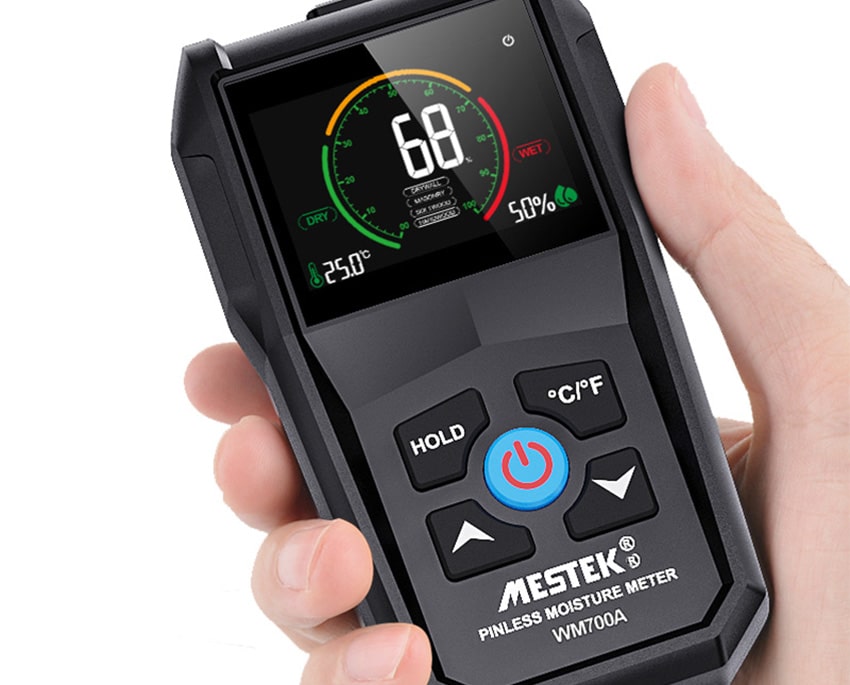
How do you measure wood moisture content?
Wood moisture content is measured directly in the material using a moisture meter.
Step by step:
- Make sure the wood has not been treated with salts or chemicals that could affect readings
- Select the correct wood species setting on the meter
- Take a reading within a few seconds and repeat at 3-4 points to calculate an average
- Calibrate the meter regularly to ensure accurate results
For reliable readings in demanding environments, professional moisture meters provide the highest accuracy.
Where and when should you measure moisture content?
Moisture measurements are particularly important in:
- Critical areas: Lofts, crawl spaces, basements, floor and wall constructions
- High-risk timber: Wood in contact with moisture or exposed to poor ventilation
- Renovation projects: Before installing new floors, walls or ceilings
Moisture content in materials changes more slowly than air humidity, making direct material measurements more reliable than relying solely on indoor humidity readings.
How moisture content affects mould growth
Mould fungi typically begin to grow on wood surfaces when moisture content exceeds 17–20%. Wood-decay fungi require even higher moisture levels, usually above 24%.
High moisture content combined with poor ventilation creates ideal conditions for mould. Regular measurement allows you to detect risk early and preserve the long-term durability of the wood.
What to do if the moisture content is too high
If measurements show excessive moisture levels:
- Improve ventilation in the affected area
- Use a dehumidifier to reduce ambient moisture
- Allow timber to dry fully before painting or installation
- If mould risk is present, clean surfaces with an appropriate mould treatment
Early action significantly reduces damage and repair costs.
Buy a hygrometer/moisture meter
View all our products-
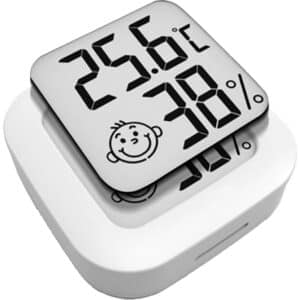
Mini moisture in the air meter
Super simple hygrometer in mini size. Displays both temperature and relative humidity. Includes a double-sided adhesive pad, so the moisture meter can be mounted on, for example, a cabinet door or a tile wall. Can also be placed on, for example, a shelf or a table.5.99 £ -
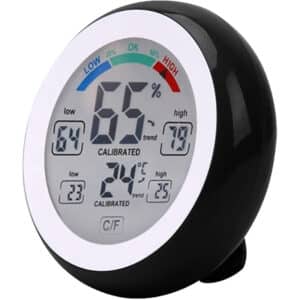
Measure humidity and temperature
Monitor relative humidity and temperature in your home or business with this simple hygrometer. Stylish design with a large, round screen. Can be hung on a wall or placed on a table. Relative humidity is measured in the range of 20-90% with an accuracy of ±5%. Temperature is measured in the range of 0-50 ℃ with an accuracy of ±1 ℃.12.99 £ -
Sale!
Sale!
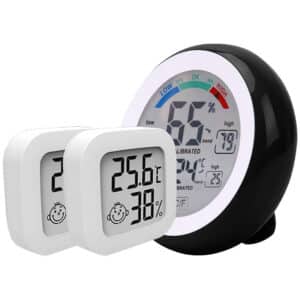
Humidity control pack
Monitor relative humidity and temperature in your home or business with this hygrometer pack. The pack contains 1 hygrometer with a large, round screen and two mini hygrometers, which can be placed on walls with stickers or via the magnet on the back on a fridge or freezer or stood on a table. Relative humidity is measured in the range of 20-90% with an accuracy of ±5%. Temperature is measured in the range of 0-50 ℃ with an accuracy of ±1 ℃.Original price was: 24.97 £.19.99 £Current price is: 19.99 £.