Free deliveries for orders over £50
 info@agx-nordic.co.uk
 07709 389021

How to spot moisture damage
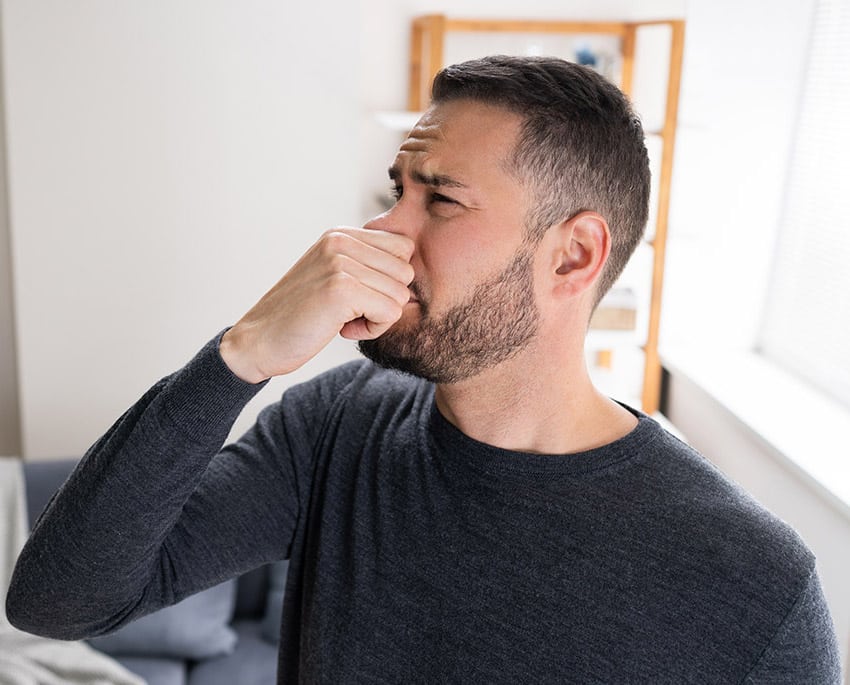
Signs of moisture damage can range from discoloured walls, ceilings and floors to swollen wooden surfaces and peeling wallpaper. A persistent musty smell is also a common warning sign that moisture may be present.
Using a hygrometer makes it possible to detect elevated moisture levels early, before the damage develops further. If there is any suspicion of mould, a mould test is recommended, as it can quickly confirm whether mould is present and whether action is required.
Where does moisture damage occur?
Moisture damage most often develops in specific areas of the home, each with its own risk factors.
Loft
Moisture damage in the loft often occurs when ventilation is insufficient, causing condensation on cold surfaces. Roof beams and insulation are particularly vulnerable. Leaking roof tiles can also allow water to seep in, which may lead to issues such as white mould in the loft.
Basement
Basements are especially prone to moisture damage due to their close contact with ground moisture and often limited ventilation. Water can penetrate through unsealed walls and floors, and high humidity levels can lead to mould growth and deterioration of building materials. Moisture in the basement is therefore one of the most common moisture-related issues in residential buildings.
Bathroom
Bathrooms are exposed to high moisture levels from showers and baths. Common problem areas include grout lines, tiles and floors. Without effective ventilation, moisture can quickly spread and create favourable conditions for mould growth.
Kitchen
In kitchens, moisture damage often occurs behind sinks and around dishwashers. Leaking pipes and steam from cooking can cause problems if ventilation is inadequate.
Utility room
Washing machines and tumble dryers generate large amounts of moisture. Poor ventilation can result in moisture damage to walls and floors. Regular cleaning and good airflow help reduce the risk.
Why does moisture damage occur?
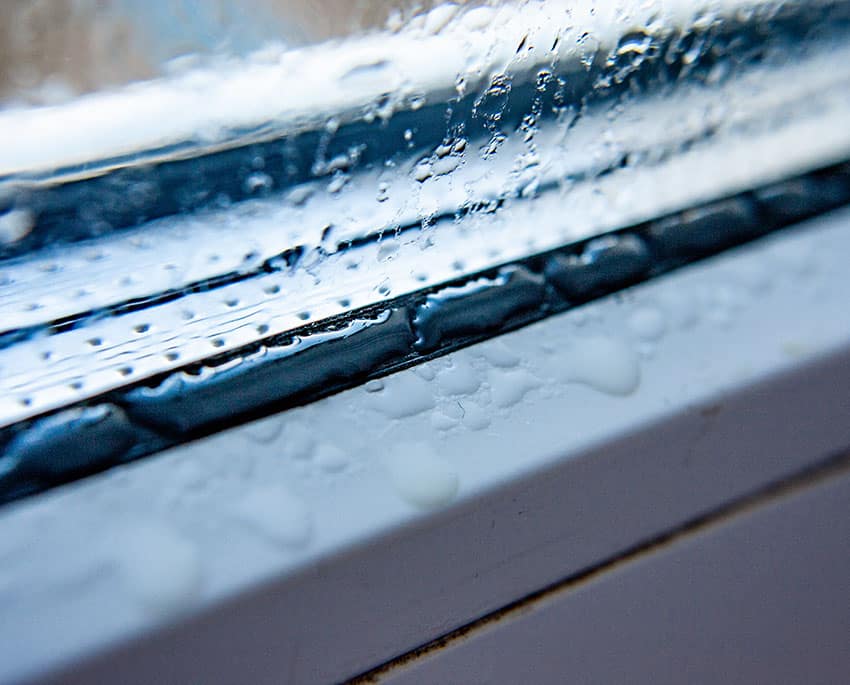
Moisture damage usually develops as a result of both internal and external factors. One of the most common causes is poor ventilation, where humid air is unable to escape and instead accumulates indoors. This is particularly problematic in colder climates, where warm, moist air meets cold surfaces and forms condensation.
Leaks from pipes, roofs or installations are another frequent cause, as water can collect unnoticed over time. In addition, poorly functioning drainage systems around a property can lead to standing water and moisture penetration.
What you can do about moisture damage
Acting quickly is essential to limit the extent of moisture damage. The sooner the issue is addressed, the less severe the damage and the lower the repair costs.
Start by identifying and eliminating the source of moisture, such as repairing leaks or improving drainage around the building. Enhancing ventilation, especially in high-risk areas like bathrooms, kitchens and utility rooms, is also an effective preventive measure.
Using a dehumidifier can help keep moisture levels under control, and regular measurements make it easier to avoid too much moisture before it causes structural or health-related problems.

What happens if moisture damage is ignored?
If moisture damage is not addressed in time, it can lead to serious consequences. Mould growth is common and may cause health issues such as allergic reactions and respiratory problems.
Moisture can also compromise the structural integrity of a building. Materials like wood may begin to rot, swell or crack, leading to extensive and costly repairs. Over time, unresolved moisture damage can significantly reduce the value of a property.
Buy a hygrometer/moisture meter
View all our products-
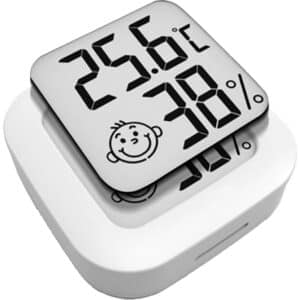
Mini moisture in the air meter
Super simple hygrometer in mini size. Displays both temperature and relative humidity. Includes a double-sided adhesive pad, so the moisture meter can be mounted on, for example, a cabinet door or a tile wall. Can also be placed on, for example, a shelf or a table.5.99 £ -
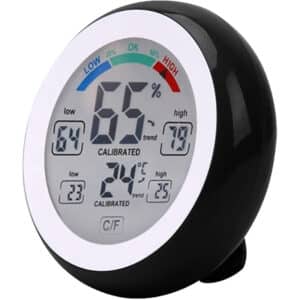
Measure humidity and temperature
Monitor relative humidity and temperature in your home or business with this simple hygrometer. Stylish design with a large, round screen. Can be hung on a wall or placed on a table. Relative humidity is measured in the range of 20-90% with an accuracy of ±5%. Temperature is measured in the range of 0-50 ℃ with an accuracy of ±1 ℃.12.99 £ -
Sale!
Sale!
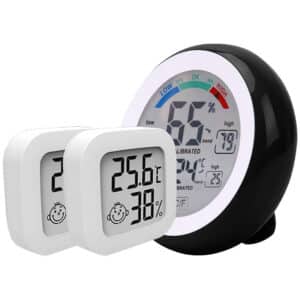
Humidity control pack
Monitor relative humidity and temperature in your home or business with this hygrometer pack. The pack contains 1 hygrometer with a large, round screen and two mini hygrometers, which can be placed on walls with stickers or via the magnet on the back on a fridge or freezer or stood on a table. Relative humidity is measured in the range of 20-90% with an accuracy of ±5%. Temperature is measured in the range of 0-50 ℃ with an accuracy of ±1 ℃.Original price was: 24.97 £.19.99 £Current price is: 19.99 £.